I have a couple of vehicles that sometimes sit for long periods, and one of the things I regularly deal with is battery drain.
My usual solution has been simple: disconnect the battery.
It works, but constantly loosening and reconnecting the battery terminal gets old quickly.
That is why I installed the PowBay Battery Disconnect Switch.
It is a very basic piece of hardware, but for a stored or project vehicle, it solves a real problem.
Why I Wanted a Battery Disconnect
One of my vehicles may sit while we are traveling, and I also have a project vehicle that spends a lot of time parked between work sessions.
With the project car in particular, I may crank the engine multiple times while troubleshooting without actually driving enough to recharge the battery.
Instead of physically removing or disconnecting the battery cable every time, I wanted a switch I could simply turn off.
That is exactly what this does.
Simple Mechanical Design
There is not much complexity here.
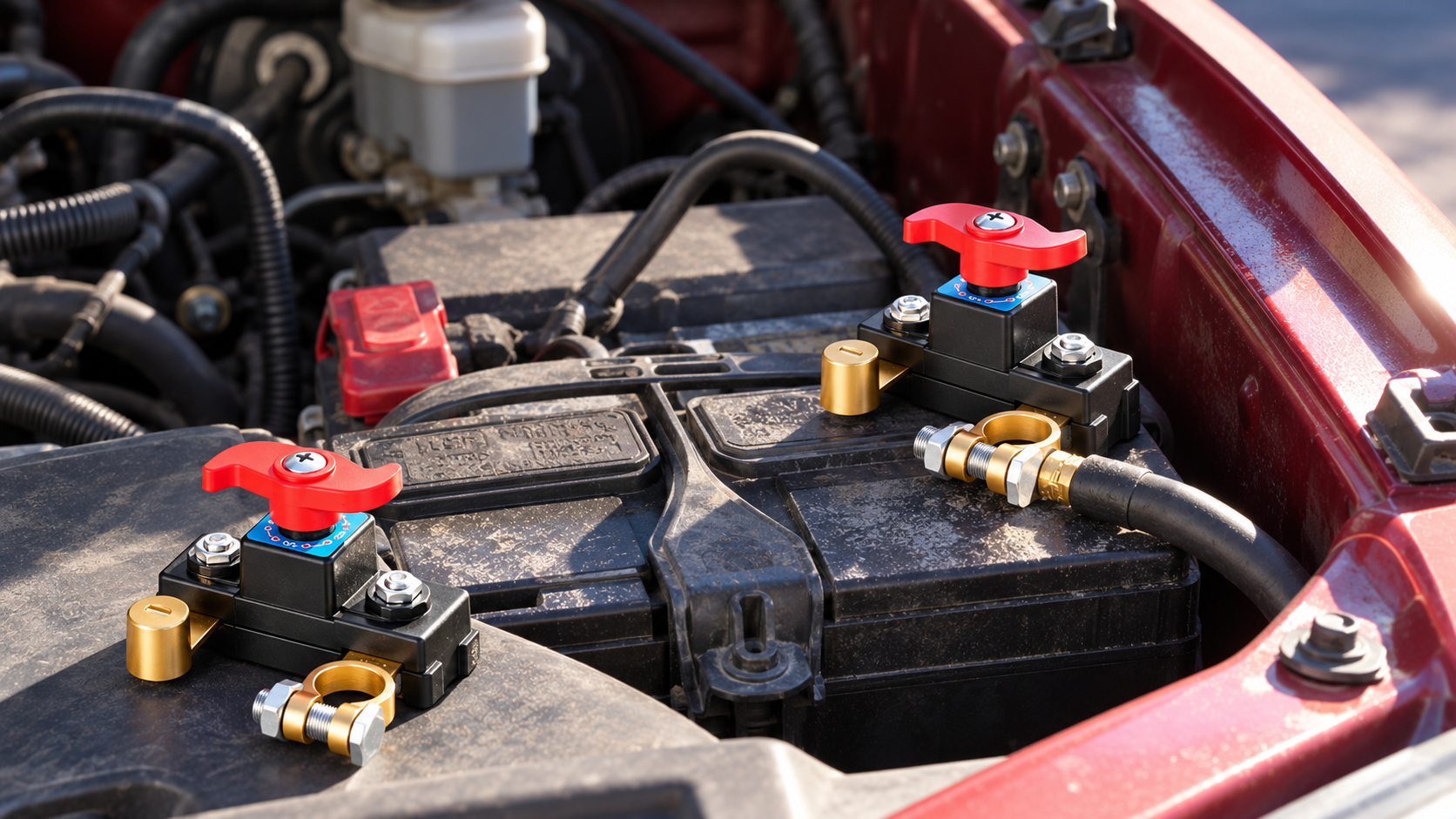
The PowBay switch mounts directly at the battery terminal and uses a rotary knob to open or close the battery circuit.
Turn it OFF and battery power is disconnected.
Turn it ON and the circuit is restored.
For a storage vehicle, that simplicity is actually one of the main reasons I like it.
Pure Copper Construction
The main conductive components are made from copper.
For a component that sits directly in the vehicle’s main battery connection, having a solid conductive material is important.
The hardware feels substantial enough for what it is, and once tightened onto my battery, the connection felt secure.
Installation
Installation was very easy on my vehicle.
I installed it on the negative battery terminal.
The basic process was:
- Turn the vehicle completely off.
- Disconnect the negative battery cable.
- Install the disconnect switch on the battery terminal.
- Attach the vehicle’s negative cable to the switch.
- Tighten everything securely.
- Turn the switch ON when you want normal vehicle power.
I only needed a basic wrench for my installation.
The kit also includes small shims that can be used if additional fitment is needed around the battery post.
You should always verify your battery terminal dimensions and available hood clearance before purchasing.
Testing the OFF Position
Once installed, I turned the switch to OFF.
I went inside the vehicle and confirmed that the car had no electrical power.
That showed that the switch was successfully opening the battery circuit.
Turning It Back On
Next, I turned the knob back to ON.
The vehicle immediately regained electrical power, and I started the engine normally.
That is really all I wanted from this product.
Instead of reaching for a wrench every time I want to store the vehicle, I can simply turn the switch.
Great for Project Cars
This is probably where I will get the most value.
Project vehicles can spend a lot of time sitting while you:
- wait for parts
- troubleshoot problems
- work through repairs
- pause between weekends
- repeatedly crank the engine without driving
My project vehicle normally gets its battery disconnected or removed during longer periods of inactivity.
With this switch installed, I can leave the battery in place and simply shut off the connection.
Two-Pack Makes Sense for Me
This particular kit comes with two disconnect switches.
A normal vehicle only needs one.
For me, though, the two-pack is actually useful because I have another project vehicle that can use the second one.
If you only have one vehicle, keep in mind that you will probably have an extra switch.
What I Like
The biggest positives for me are:
- extremely simple design
- easy installation
- only basic tools required
- eliminates repeated battery-cable removal
- useful for long-term parking
- good fit for project vehicles
- copper conductive components
- two switches included
What I Don’t Like
So far, there really is not much for me to complain about.
It is a very simple product, and it does what I bought it to do.
Who This Is For
This makes the most sense for:
- project-car owners
- vehicles that sit for long periods
- seasonal vehicles
- older cars with parasitic battery drain
- RVs and campers with compatible batteries
- boats and equipment with compatible top-post batteries
- people who regularly disconnect their battery during storage
Who Probably Does Not Need It
You probably do not need this if:
- your vehicle is driven regularly
- you have no battery-drain issues
- your battery or terminal design is incompatible
- you already use another battery-isolation system
Also remember that disconnecting battery power can reset certain vehicle settings, clocks, radio presets, learned values, or security systems depending on the vehicle.
That is something to consider before installing a manual disconnect on a newer or more electronics-heavy car.
Important Safety Note
The switch should only be operated with the engine off and electrical loads shut down.
Do not use it to disconnect the battery while the engine is running.
You should also make sure the terminal connection is tight and that there is enough clearance around the switch so it cannot contact the hood or nearby metal.
Final Verdict
The PowBay Battery Disconnect Switch is one of those inexpensive, simple products that solves a very specific problem well.
For vehicles that sit, especially project cars, being able to shut off battery power with a turn of a knob is much more convenient than repeatedly removing the battery cable.
My verdict: a simple and practical upgrade for stored vehicles, project cars, and compatible battery systems where you regularly need to disconnect power.
Affiliate Disclaimer
Some of the links in this post may be affiliate links, which means I may earn a commission if you make a purchase through them, at no extra cost to you.
Product Link:
https://amzn.to/4zMHJe2